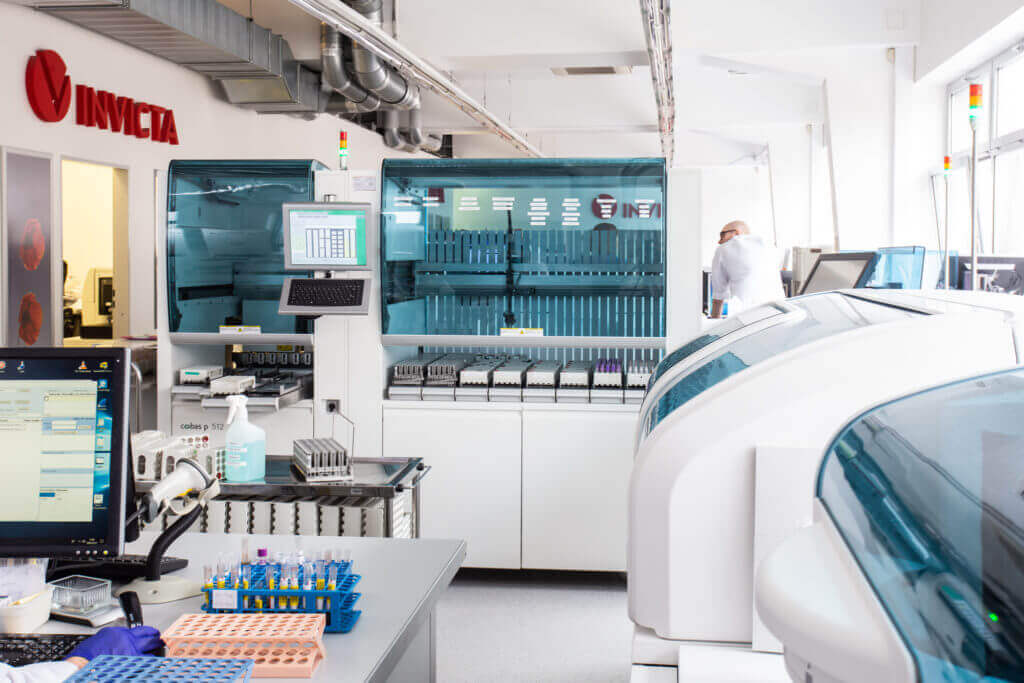
Genetic testing

Errors can occur in a person’s genetic makeup, for example in the form of an extra chromosome, or the absence or duplication of a DNA segment. Many of these changes, known as mutations, are inherited from our ancestors. Genetic testing enables us to analyse DNA for any such changes.

Get tested and put your mind at rest

Genetic tests you can have done
at INVICTA Clinics

    • karyotype from peripheral blood lymphocytes
    • karyotype from amniocytes
    • karyotype from tissue of a miscarried foetus
  • – for women trying to conceive

    The panel identifies the most common genetic causes of female infertility resulting from congenital thrombophilia (which increases the risk of miscarriage) and ovarian dysfunction. In addition, you will find out whether your child may develop respiratory disorders (cystic fibrosis) or an intellectual disability (Fragile X syndrome).

    The panel includes tests for:

    • mutations in the F5 and F2 genes
    • mutations in the CFTR gene
    • the M2 haplotype in the ANXA5 gene
    • mutations in FMR1
  • This test complies with the guidelines of the PTMR (Polish Society for Reproductive Medicine). It will enable you to check whether you have a genetic predisposition to reduced sperm parameters. Genetic mutations and the resulting conditions may be the cause of obstruction or absence of the vas deferens. In addition, you will find out whether your child may develop respiratory disorders (cystic fibrosis) and whether there is an increased risk of miscarriage for your partner.

    The panel includes testing for:

    • mutations in the AZF gene
    • mutations in the CFTR gene
    • the M2 haplotype in the ANXA5 gene
  • – for women who have experienced pregnancy loss

    The Polish Gynaecological Society recommends screening for congenital thrombophilia following pregnancy loss. This test will also help you determine whether there is an increased risk of implantation disorders leading to early miscarriages. If the diagnosis is confirmed, anticoagulant treatment can be initiated to enable the pregnancy to be carried to term.

    The panel includes tests for:

    • mutations in the F5 and F2 genes
    • mutations in the SERPINE1 gene
    • the M2 haplotype in the ANXA5 gene
  • – for women on contraception or hormone replacement therapy

    This test is recommended for women who are starting or are already taking oral hormonal contraceptives.

    The use of contraceptives in women with confirmed genetic changes may lead to blood clots and increase the risk of breast cancer. If you are at increased risk, you will be able to make an informed choice to use a different form of contraception.

    The panel includes tests for:

    • mutations in the F5 and F2 genes
    • mutations in the BRCA1 and BRCA2 genes
  • Genetic testing panel – breast and ovarian cancer – basic

    – for women as part of breast and ovarian cancer screening

    The panel checks whether you carry the most common mutations in genes that increase the risk of developing breast and ovarian cancer by up to 10 times. If the result confirms that you are in the high-risk group, you will be able to undergo ultrasound scans or mammograms regularly and in full knowledge of the facts. You can also recommend this test to other family members – your mother or daughter – who may also be at risk.

    The panel includes the following tests:

    • Detection of mutations in the BRCA1 gene
    • Detection of mutations in the BRCA2 gene
    • Detection of mutations in the CHEK2 gene
    • Detection of mutations in the NOD2 gene


    Genetic testing panel – breast and ovarian cancer – extended

    – for people with a family history of breast or ovarian cancer

    This test is worth having if you wish to assess your genetic predisposition to cancer – particularly breast and ovarian cancer. If you have relatives with cancer or if you have been diagnosed with breast or ovarian cancer, this extended genetic panel is for you. By knowing your genetic risk, you can take steps to ensure the disease is diagnosed early or that more effective treatment is provided.

    The panel includes the following tests:

    • Detection of mutations in the BRCA1 gene
    • Detection of mutations in the BRCA2 gene
    • Detection of mutations in the CHEK2 gene
    • Detection of mutations in the NOD2 gene
    • Detection of mutations in the PALB2 gene
  • – for people who suspect they may have congenital thrombosis

    Congenital thrombophilia is a genetic predisposition to thrombosis, which can lead to, amongst other things, heart attacks, strokes and pulmonary embolisms.

    It is particularly worth having this test if anyone in your family has had any of the above cardiovascular conditions. If a mutation is detected, the patient, following consultation with a haematologist and further biochemical tests, will be able to receive the most appropriate treatment, minimising the risk of complications from the condition.

    The panel includes testing for:

    • mutations in the F5 and F2 genes
    • polymorphisms in the SERPINE1 gene
    • mutations in the MTHFR gene
  • Mutations in the CFTR gene

    A test carried out to determine carrier status or confirm the most common genetic disorder – cystic fibrosis. One of the symptoms of the disease is the production of thick mucus by the patient’s body, which causes changes mainly within the respiratory, digestive and reproductive systems. In women, this leads to the production of excessively thick cervical mucus, which hinders sperm migration. In men, it results in obstruction or atrophy of the vas deferens.


    Detection of deletions in the AZF region

    A test carried out as part of the diagnosis of male infertility.

    The test enables the detection of microdeletions in the AZF (azoospermia factor) regions located on the long arm of the Y chromosome, which cannot be detected by cytogenetic methods, and determines whether male infertility has a genetic cause. Such a mutation may be the cause of impaired semen parameters (absence or very low sperm count).


    Detection of the G20210A mutation in the prothrombin gene – factor II

    This test involves the detection of the G20210A mutation in the prothrombin gene (factor II) of the blood coagulation system. The 20210G>A mutation in the prothrombin gene is the second most common cause of congenital thrombophilia (thrombosis), and also contributes to the occurrence of miscarriages.


    Detection of mutations in the BRCA1 gene

    A test for all women, carried out as part of breast and ovarian cancer screening. Mutations in the BRCA1 gene increase the risk of breast cancer by up to 10 times.


    Detection of mutations in the CHEK2 gene

    A test for all women; a mutation more than doubles the risk of developing breast cancer, and increases it by as much as fivefold if there is a family history of breast cancer.


    Detection of 3 mutations in the proaccelerin gene (including the Leiden mutation) – factor V

    This test is intended for women who are unable to conceive, following a miscarriage or failed IVF treatment, and is also recommended for those who have experienced thromboembolic events or have a family history of cardiovascular disease. The result aims to identify an increased risk of thrombosis by detecting a genetic predisposition to this condition, namely congenital thrombophilia.

    Detection of a polymorphism in the MTHFR gene

    Polymorphism in the MTHFR gene is responsible for the genetic basis of hyperhomocyscaemia, which is considered a risk factor for the development of primarily cardiovascular diseases (ischaemic heart disease, atherosclerosis, stroke, thrombosis), neurodegenerative diseases, pregnancy-related complications and many cancers.


How else can we help you?

Call us

Mon-Fri: 7:00 - 20:00
Sat: 7:00 - 15:00

Contact form

Have questions for us? Write. We'll call you.